
5 of the best yoga poses for back pain - a natural way to find relief
22 June 2026
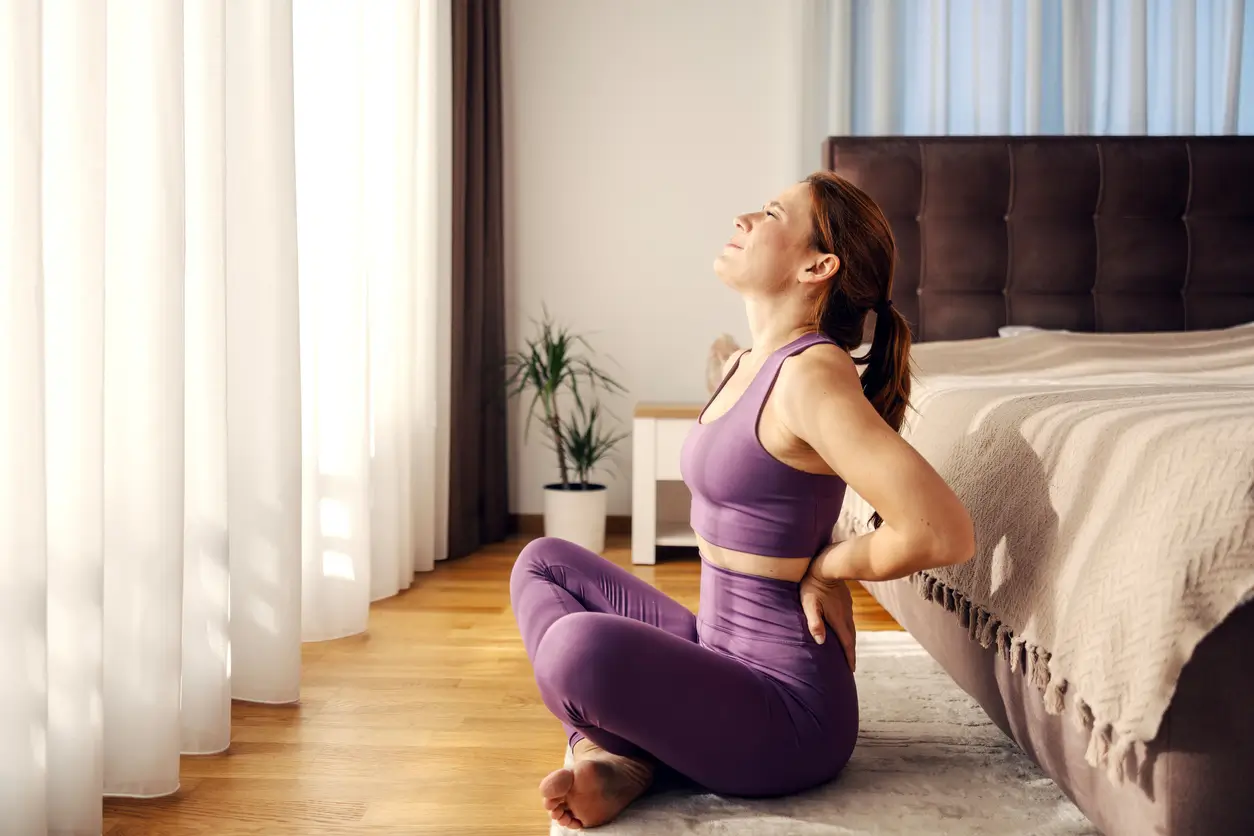
Back pain is one of the most common physical complaints, affecting people of all ages, fitness levels and lifestyles. Whether it stems from long hours spent sitting at a desk constantly looking down at a computer screen, muscle strain, stress or poor posture, back pain can have a significant impact on everyday life. Even minor aches and persistent niggles can make daily activities feel more challenging and gradually affect your overall wellbeing.
While there are many ways to manage back discomfort, gentle movement is often one of the most effective. If you're looking for a low-impact form of exercise that can help relieve tension, improve mobility and support long-term spinal health, yoga could be the answer.
In this guide, we'll explore some of the best yoga poses for back pain, explaining how each one can help ease discomfort and support a stronger and more flexible spine.
The best yoga poses for back pain
Yoga is renowned for its ability to strengthen the muscles that support the spine, improve flexibility and encourage better posture. It can also help release built-up tension and reduce stress which can help towards a healthier and happier back.
Here are five of the best yoga exercises to try for back pain:
1. Child's Pose (Balasana)
Child's Pose or Balasana is one of the most gentle and restorative yoga postures you can do, making it an excellent choice if you’re experiencing back pain or stiffness. It’s also a great pose for beginners.
This calming pose helps to gently stretch the lower back, hips, thighs and ankles while encouraging the body to relax and release tension. By lengthening the spine and creating space between the vertebrae, Child's Pose can help alleviate tightness in the lower back and promote a feeling of comfort and relief.
In addition to its physical benefits, Child's Pose is also known for its calming effect on the mind. Focusing on slow, steady breathing while holding the posture can help reduce stress and muscle tension. Both of which can contribute to back discomfort.
How to practice Child's Pose
- Begin by kneeling on the floor with your big toes touching and spread your knees apart to the width of your mat. You can also do it with your knees together.
- Sit your hips back towards your heels and slowly lower your torso forward between your thighs.
- Extend your arms out in front of you with your palms facing down. Or rest them alongside your body if that feels more comfortable.
- Allow your forehead to gently rest on the mat or a cushion.
- Take slow deep breaths allowing your body to soften with each exhale.
- Hold the position for 30 to 60 seconds or longer if it feels comfortable, before slowly rising back up to a seated position.
If you experience discomfort in your knees or hips, place a folded blanket or cushion between your heels and hips for extra support.
2. Cat Cow Stretch (Marjaryasana-Bitilasana)
The Cat Cow Stretch is a gentle flowing sequence that combines two yoga poses, Cat Pose (Marjaryasana) and Cow Pose (Bitilasana). It improves mobility and flexibility throughout the spine.
Often used as part of a warm up, this movement helps to increase circulation to the muscles and joints of the back, making it particularly beneficial if you experience stiffness, tension or mild discomfort in your back.
As you move between the two positions, your spine is taken through both flexion and extension which helps to improve its range of motion and encourage healthy movement patterns. The Cat Cow Stretch can also help relieve tension caused by prolonged sitting, poor posture or repetitive movements, while promoting greater awareness of spinal alignment. As it’s a gentle movement it’s great for beginners.
How to practice the Cat Cow Stretch
- Begin in a tabletop position on your hands and knees, ensuring your wrists are directly beneath your shoulders and your knees are beneath your hips.
- As you inhale, gently arch your back, lifting your chest and tailbone towards the ceiling while allowing your gaze to move forward. This is Cow Pose.
- As you exhale, slowly round your spine towards the ceiling, drawing your belly button towards your spine and tucking your chin towards your chest. This is Cat Pose.
- Continue moving smoothly between the two positions, matching each movement to your breath.
- Repeat the sequence slowly and mindfully for 1–2 minutes, focusing on creating gentle movement through the entire length of the spin.
Move at a pace that feels comfortable and avoid forcing the stretch. Focus on slow, controlled movements and deep breathing to maximise the benefits and help release tension throughout your back.
3. Sphinx Pose (Salamba Bhujangasana)
Sphinx Pose is a gentle backbend that helps improve spinal mobility, open the chest and promote relaxation. Named after the ancient Egyptian sphinx, the pose resembles the statue's upright and regal posture. It’s suitable for beginners and is commonly used in restorative and yin yoga classes due to its calming nature.
This pose offers a range of benefits, including strengthening the muscles that support the spine, stretching the front of the body and encouraging better posture by opening the chest and shoulders. Sphinx Pose is particularly beneficial if you spend long periods sitting, as it helps counteract stiffness and tension. It’s also great at helping ease mild upper and lower back discomfort by gently mobilising the spine and reducing tightness in the lower back, leaving you feeling more open, supported and relaxed.
How to practice Sphinx Pose
- Lie on your stomach with your legs extended behind you.
- Place your elbows directly beneath your shoulders and rest your forearms on the mat.
- Gently press into your forearms and lift your chest, keeping your shoulders relaxed.
- Engage your core lightly and lengthen through the crown of your head.
- Breathe deeply and hold the pose for 30 seconds to two minutes.
- Slowly lower your chest back to the mat to release the pose.
4. Bridge Pose (Setu Bandhasana)
Bridge Pose is a gentle backbend that strengthens the back, glutes and legs while opening the chest and shoulders. It’s a beginner-friendly pose that helps improve posture, increase spinal mobility and release tension caused by prolonged sitting. Bridge Pose is often included in yoga sequences to build strength, support spinal health and promote relaxation.
How to practice Bridge Pose
- Lie on your back with your knees bent and feet flat on the mat, hip-width apart.
- Place your arms alongside your body with your palms facing down.
- Press firmly into your feet and engage your core.
- Lift your hips towards the ceiling, creating a straight line from your shoulders to your knees.
- Keep your shoulders relaxed and your knees aligned with your hips.
- Hold the pose for 30 seconds to one minute while breathing deeply.
- Slowly lower your hips back to the mat to release the pose.Bridge Pose is an excellent posture for building strength, improving flexibility and supporting overall spinal health.
5. Thread the Needle Pose (Parsva Balasana)
Thread the Needle Pose is a gentle spinal twist that stretches the shoulders, upper back, neck and chest. It’s commonly used in yoga practices to relieve tension in the upper body, improve mobility through the thoracic spine (mid-back) and promote relaxation.
This beginner-friendly pose is particularly helpful if you spend long hours sitting at a desk or looking down at screens, as it helps counteract rounded shoulders and poor posture.
How to practice Thread the Needle Pose
- Begin on all fours with your hands beneath your shoulders and knees beneath your hips.
- Inhale and lengthen your spine.
- Exhale as you slide your right arm underneath your left arm, palm facing up.
- Lower your right shoulder and the side of your head to the mat.
- Keep your hips stacked above your knees and avoid leaning heavily to one side.
- Press your left hand gently into the floor for support or extend it overhead for a deeper stretch.
- Breathe deeply and hold the pose for 30 seconds to one minute.
- Slowly press into your supporting hand to return to the starting position.
- Repeat on the opposite side.
Choosing yoga to help with your back pain
Yoga is a gentle, low impact form of exercise that can help both manage and prevent back pain. Regular practice improves flexibility, strengthens the muscles that support the spine and promotes better posture, all of which contribute to a healthier back.
Consistency is key. Even just a few minutes each day can make a noticeable difference in reducing stiffness, easing discomfort and improving mobility. Beyond its physical benefits, yoga also supports overall wellbeing by encouraging relaxation which helps to reduce stress and balance both body and mind.
Keen to learn more about yoga? Discover the five warrior poses and their benefits.
Specialist yoga insurance through Insure4Sport
Whether you’re an experienced instructor or new to yoga, you may want to consider financially protecting yourself with specialist yoga insurance.
Unfortunately, as with most sports, yoga carries the risk of suffering an injury, which could not only stop you from exercising but also affect your ability to work for a period. You can get an instant online quote today.
Please note the information provided on this page should not be taken as advice and has been written as a matter of opinion. For more on insurance cover and policy wording, see our homepage.
Get a quick quote for Sports Insurance
Get A QuoteRelated Posts
Insure4Sport is a
 Insurance Services product


©Copyright Ripe Thinking Limited 2026.
Insure4Sport® is a registered trademark and a trading name of Ripe Insurance Services Limited which is Authorised and Regulated by the Financial Conduct Authority No.313411. Registered office: One Stockport Exchange, Railway Road, Stockport, United Kingdom, SK1 3SW. Registered in England No. 04507332.