
5 warrior poses for yoga and their benefits
26 May 2026
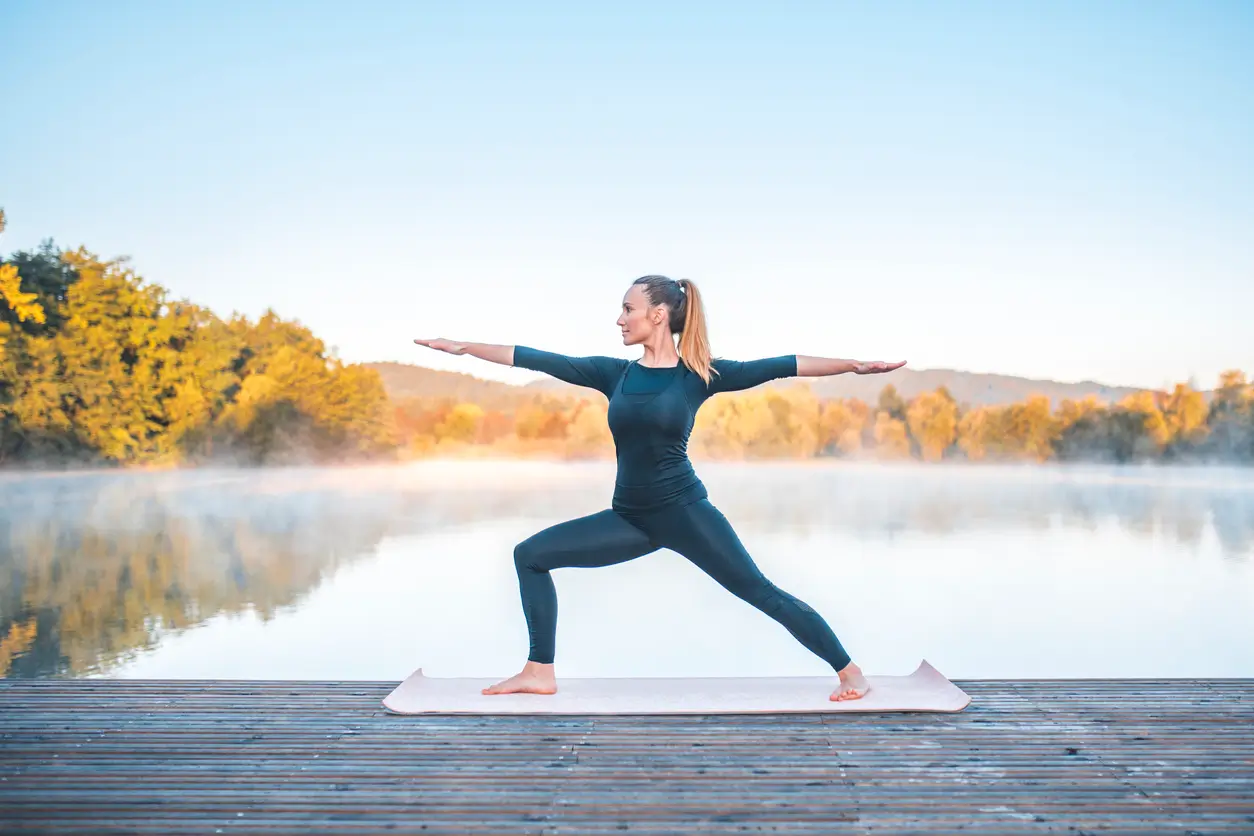
Warrior poses are some of yoga’s foundational postures and are known for building strength, balance, flexibility, and focus. Not only are they important for yoga practitioners, but they are also ideal for beginners just getting into yoga.
In this guide, we discuss the basic warrior pose, look at why warrior matters, and detail five variations you can try.
What is a warrior pose?
Warrior poses are standing yoga postures inspired by the mythical warrior Virabhadra and are common across a range of yoga styles, including Vinyasa, Hatha, and Rocket Yoga. These poses are based on a grounded stance, strong legs, open hips and chest, and a focused gaze.
There are different warrior variations to try which provide slightly different benefits. Five of the main variations are Warrior I, Warrior II, Reverse Warrior, Bound Warrior, and Humble Warrior. While they have subtle differences, all warrior poses help with physical strength and mental grounding.
Why are warrior poses important?
Warrior poses are important as they offer a range of benefits, including:
• Improving lower body strength
• Increasing hip and shoulder mobility
• Enhancing posture and alignment
• Building balance and stability
• Supporting core engagement
• Encouraging mental focus and confidence
• Improving body awareness and coordination
If you spend a lot of time sitting at a desk, warrior poses can be particularly beneficial. They target several areas at once and support both functional movement and flexibility.
5 warrior poses that help with strength, stability, and mobility
While warrior pose variations look quite similar, each one offers slightly different physical and mobility benefits.
Warrior I
In Warrior I, your front knee is bent, your back foot is grounded, and your hips are facing forward. Once your legs are in the right position, lift your arms overhead.
Warrior I helps to strengthen legs and glutes. It will open your hip flexors and chest and improve posture and concentration.
Warrior II
Warrior II looks like Warrior I, but your stance should be wider, and your arms should be extended outwards and parallel to the floor rather than held above your head. In this yoga pose, your gaze should be over your front hand. It’s important to keep your front knee aligned over your ankle to reduce the risk of injury.
This pose builds leg endurance, strengthens the core and shoulders, improves hip mobility and stability, and encourages focus and stamina.
Reverse Warrior
Reverse Warrior is a variation of Warrior II with a side-body stretch. In this pose, your front arm reaches up overhead while your back hand rests lightly on your rear leg. This results in a gentle back arch. Avoid putting excessive weight on your back leg and keep your shoulders relaxed.
This warrior pose variation stretches the side of your body and ribs, improves spinal mobility, strengthens legs, opens the chest, and supports flexibility and breath expansion.
Bound Warrior
Bound Warrior is an arm bind variation from Warrior II and is a more advanced pose that requires shoulder mobility. From Warrior II, put your hand down to touch the mat before bringing it between your legs. Then bring your other hand down to hold it and look up to the ceiling.
This pose helps to open the hips and chest, improves shoulder flexibility, challenges balance and coordination, and builds body awareness. If your hands don’t connect comfortably in this pose, you can use a yoga strap to help you.
Humble Warrior
Humble Warrior is a forward-folding variation of Warrior I and involves clasping your hands behind your back while folding forward. Move slowly when folding as this will protect your lower back and help you to remain stable.
This opens your shoulders and chest, stretches your hips and hamstrings, encourages balance and grounding, and promotes relaxation and focus.
Staying safe during the different warrior pose variations
Whether you’re taking part in a beginner class or advancing your yoga practice, warrior poses should leave you feeling strong and calm, not injured. To reduce the risk of strains, slips, and overuse injuries, remember to:
- Warm up before deeper poses
- Listen to your body
- Check your alignment
- Use props when needed
- Stay hydrated before and after your session
- Make sure your mat has proper grip
- Create enough space around you
In yoga, warrior poses support strength, stability, mobility, and focus. You should practice consistently and mindfully to get the most out of your sessions. Start slowly, modify the different variations where needed, and don’t push your body to do anything that doesn’t feel right.
Warrior pose variations FAQs
Are warrior poses good for beginners?
Yes, many warrior pose variations are good for beginners as they help to build foundational strength and balance. Poses such as Warrior I and Warrior II can be modified by shortening the stance or using yoga blocks for extra support. Beginners should focus on proper alignment and controlled breathing rather than trying to deepen the pose too quickly.
Which warrior pose is best for flexibility?
Reverse Warrior and Humble Warrior are great options for improving flexibility as they stretch the hips, chest, shoulders, and sides. Regular practice can increase mobility and strengthen supporting muscles, which is important for maintaining joint stability and preventing injury.
How long should you hold a warrior pose in yoga?
It’s common to hold a warrior pose for around 30 seconds to one minute, depending on your experience level and your chosen yoga style. Holding the pose for longer can help improve endurance, stability, and concentration, while shorter holds may be better for beginners or dynamic yoga flows.
Specialist yoga insurance through Insure4Sport
Whether you’re an experienced instructor or new to yoga, you may want to consider financially protecting yourself with specialist yoga insurance.
Unfortunately, as with most sports, yoga carries the risk of suffering an injury, which could not only stop you from exercising but also affect your ability to work for a period. You can get an instant online quote today.
Please note the information provided on this page should not be taken as advice and has been written as a matter of opinion. For more on insurance cover and policy wording, see our homepage.
Get a quick quote for Sports Insurance
Get A QuoteRelated Posts

Insure4Sport is a
 Insurance Services product


©Copyright Ripe Thinking Limited 2026.
Insure4Sport® is a registered trademark and a trading name of Ripe Insurance Services Limited which is Authorised and Regulated by the Financial Conduct Authority No.313411. Registered office: One Stockport Exchange, Railway Road, Stockport, United Kingdom, SK1 3SW. Registered in England No. 04507332.