Yoga & Pilates Teacher Survey UK 2026
30 April 2026
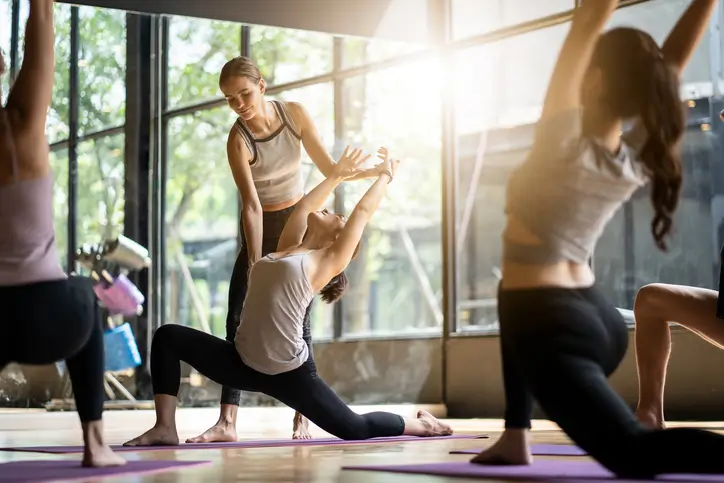
Yoga and Pilates teaching in the UK has never been more popular. Studios have multiplied on every high street, reformer Pilates has become a cultural phenomenon, and a new generation of self-employed teachers has entered the profession with enthusiasm. But behind the growth - and behind the aesthetic-led world of matching sets and studio content - teachers themselves are raising concerns about what the boom is doing to standards and the real purpose of both disciplines.
To look into the issue, we surveyed 204 teachers across the UK to understand how the profession really looks from the inside: how teachers structure their work, what challenges they face, what frustrates them most about student behaviour, and what they think the sector's rapid growth is doing to quality.
What our 2026 UK Yoga and Pilates teacher survey revealed
- 75% of Pilates teachers say the sector's rapid growth has made teaching standards worse - fuelling concerns that the reformer boom is outpacing instructor quality
- 74% of teachers say classes are becoming too focused on aesthetics, trends and content over genuine teaching quality - a direct challenge to the "Pilates girl" culture dominating social media
- 48% of Pilates teachers say students ignoring safety instructions is their biggest in-class frustration - nearly four times higher than Yoga teachers (13%)
- 74% feel pressure to create social media content to grow their business - yet word of mouth drives far more actual bookings than Instagram or TikTok
- 87% of Yoga teachers say the most common student misconception is that classes are only for flexible people
- 87% say students must always obtain consent before filming or photographing others in class
How much do Yoga and Pilates teachers earn in the UK?
Yoga and Pilates teaching takes many different shapes. Around 41% of respondents consider it their main source of income. But a significant proportion - 38% - treat it as a valued side income alongside other work, and a further 16% currently earn very little from it, often while building their student base or teaching primarily for the love of it.
Based on the midpoints of each earnings band reported by teachers, the weighted average annual income from teaching is £5,238 for Yoga teachers and £11,238 for Pilates teachers, with an average of £8,750 across all respondents.
| Earnings band | All teachers | Yoga teachers | Pilates teachers |
| Under £2,500 | 46% | 56% | 38% |
| £2,500 - £4,999 | 16% | 15% | 21% |
| £5,000 - £9,999 | 15% | 15% | 17% |
| £10,000 - £19,999 | 11% | 11% | 6% |
| £20,000 - £29,999 | 2% | 0% | 2% |
| £30,000 - £49,999 | 8% | 3% | 10% |
| £50,000+ | 2% | 0% | 6% |
| Average | £8,750 | £5,238 | £11,238 |
Those averages are pulled upward by a relatively small number of high earners - 10% of Pilates teachers earn £50,000 or more, compared to 0% of yoga-only teachers. Strip those out and the picture for the majority is more modest. For the 38% who teach as a side income, that is a deliberate and comfortable position. For those relying on it as their primary livelihood, the margins are tighter.
Yoga teacher vs Pilates teacher: how do earnings and working patterns compare?
The data reveals differences between how Yoga teachers and Pilates teachers operate their businesses in the UK. Pilates teachers tend to teach more sessions per week, earn more per session, and rely more heavily on private 1-to-1 work. Yoga teachers, meanwhile, are more reliant on group classes and more likely to supplement their income with other employment.
| Metric | Yoga teachers | Pilates teachers |
| Earn less than £2,500/year | 56% | 38% |
| Offer private 1-to-1 sessions | 37% | 56% |
| Teach 6+ classes per week | 22% | 50% |
| Teaching is main income | 32% | 47% |
| Demand grown vs last year | 27% | 42% |
| Students are more price-sensitive | 50% | 37% |
The Pilates boom: standards, safety and the aesthetics issue
The rapid growth of Pilates - and reformer Pilates in particular - has created a booming market. But the teachers delivering those classes have serious concerns about what growth at this pace is doing to the profession.
Three-quarters of Pilates teachers say standards have worsened as the sector has grown - significantly higher than Yoga teachers (57%). Only 10% of Pilates teachers believe standards have improved.
This is showing up in how classes run. 48% of Pilates teachers say students ignoring their instructions is one of their biggest in-class frustrations - compared to just 13% of Yoga teachers. That near four-fold difference reflects something specific to Pilates: correct form and movement sequencing isn't just a quality issue, it's a safety one. A student on a reformer who disregards cues or pushes beyond their ability isn't just getting less from the session - they risk injury.
38% of Pilates teachers cite students pushing beyond their ability despite correction as a top frustration, and 57% say the most damaging misconception students bring to class is the belief that harder or faster is always better.
Clearly, when demand outstrips the supply of well-trained instructors, corners get cut - and in a discipline built on precision and controlled movement, that has consequences.
The aesthetics problem
The concerns don't stop at the studio door. 74% of all teachers - and a higher proportion of Pilates teachers specifically - say they believe classes are becoming too focused on aesthetics, trends and content rather than teaching quality. That's nearly three in four teachers watching the discipline they trained for years to deliver be reshaped by an aesthetic driven largely by social media.
The "Pilates girl" archetype - the matching set, the reformer selfie, the carefully curated studio content - has undeniably brought new audiences to the discipline. But teachers are telling us it has also changed what students expect from a class, and not always for the better.
52% say filming during class is never appropriate 87% say consent is required before posting content featuring other students or the teacher 74% feel pressure to create social media content themselves to stay competitive.
The biggest costs facing self-employed Yoga and Pilates teachers in 2026
Like many self-employed workers, Yoga and Pilates teachers in the UK have faced a squeeze on their margins over the past 12 months. Travel costs emerged as the most commonly cited rising expense, affecting nearly half of all teachers (49%), closely followed by venue hire and Yoga and Pilates teacher insurance costs - both cited by around a third.
Despite these rising costs, the majority of teachers - 55% - have not raised their prices in the past year. Of those who have increased their rates, travel costs, venue hire and insurance were the most commonly cited reasons. Nearly a third of teachers are worried about students becoming more price-sensitive, creating a pincer effect where costs rise but pricing feels constrained.
Rising costs cited by teachers:
- Travel costs - 49%
- Venue hire - 35%
- Insurance - 35%
- Training / CPD - 29%
- Equipment / props - 27%
- Marketing / advertising - 19%
- Admin / booking software - 18%
- Tax / accounting - 17%
- Retreat / event costs - 11%
The biggest challenges for Yoga and Pilates teachers in 2026
Finding new students ranked as the single hardest obstacle - cited by 47% of all teachers. The data splits significantly by discipline: Yoga teachers (63%) are far more likely to struggle with client acquisition than Pilates teachers (25%), where demand is currently stronger.
Financial pressure is the most commonly cited source of stress, with 41% of all teachers naming it - rising to 42% for Yoga teachers. Unpredictable bookings (32%) and work-life balance also feature prominently. Pilates teachers report stronger workload sustainability, with 94% describing their load as very or fairly sustainable, compared to 79% of Yoga teachers.
Social media for Yoga and Pilates teachers: does it actually bring in students?
Nearly three in four teachers feel pressure to create social media content, yet word of mouth (64%) remains the most powerful channel for bringing in new bookings - far ahead of Instagram (37%) and Facebook (33%).
The disconnect is revealing: self-employed teachers feel compelled to invest time in content creation, yet their actual bookings most often arrive through personal recommendations and studio or gym networks. For teachers weighing how to spend limited time on marketing, this data suggests doubling down on client relationships and local reputation may deliver better returns than chasing followers.
Channels that bring the most bookings:
- Word of mouth / referrals - 64%
- Instagram - 37%
- Facebook - 33%
- Studio / gym networks - 32%
- Own website - 12%
- Email / newsletters - 11%
- Google / search - 9%
- TikTok - 3%
- LinkedIn - 2%
Filming and photography in Yoga and Pilates classes: where teachers draw the line
Teachers have strong views on phones in class. Over half (52%) believe filming is never appropriate during a session, and 87% say students should always obtain consent before posting content that includes other attendees or the teacher.
Pilates teachers hold slightly stricter views on filming (56% say never appropriate vs 48% for Yoga), but both groups are united on consent. Nearly three in four teachers believe some studios are now too focused on aesthetics, trends and content rather than teaching quality - a tension that is reshaping how the industry is perceived from the inside.
52% say filming in class is never appropriate 87% say consent is required before posting class content 74% feel classes are too focused on aesthetics over quality.
Are Yoga and Pilates teaching standards slipping?
A huge 65% of teachers believe standards have worsened as demand has grown - with Pilates teachers (75%) considerably more likely to hold this view than Yoga teachers (57%). In a sector that has seen explosive growth, this is teachers saying from the inside that the boom is outpacing quality control.
How well does Yoga or Pilates teacher training prepare you for running a business?
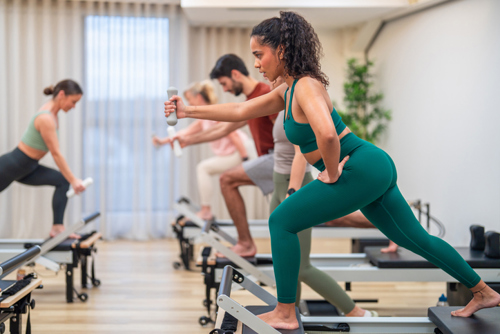
Nearly two thirds of all UK Yoga and Pilates teachers (64%) said their initial qualification left them poorly or not at all prepared for the business side of teaching. Only 17% felt their training equipped them very well for the commercial realities they would face - a significant gap given that most go on to work as self-employed instructors.
Skills teachers feel least confident about:
- Marketing / social media - 39%
- Admin / tax - 33%
- Running retreats / events - 25%
- Business planning / growth - 29%
- Attracting new students - 27%
- Pricing confidently - 22%
- Legal / compliance - 22%
- Workload / boundaries - 20%
Common misconceptions about Yoga and Pilates classes, according to teachers
Teachers were asked about the most common student misconceptions. For Yoga teachers, the standout was overwhelming: 87% say students wrongly believe classes are only for flexible people - the "I can't do Yoga, I can't touch my toes" problem that has probably kept millions of people away from something they'd love.
For Pilates, the biggest myth is almost the opposite: 57% of Pilates teachers say students wrongly believe harder or faster always means better results. In a discipline where precision and control are everything, and where the reformer boom has brought in a wave of new students shaped by high-intensity fitness culture, this misconception is not just unhelpful - it's a direct injury risk.
74% of teachers say they see anxiety in first timers about not being flexible enough - yet 73% also say students worry about being judged by others in the room.
Yoga and Pilates teachers' biggest pet peeves
Away from the business side of things, we asked teachers what they love and loathe about the day-to-day experience of running a class.
Arriving late and not disclosing injuries or health conditions tied as the joint top frustrations, each cited by 46% of all teachers. Both share a common thread: they make it harder to deliver a safe, effective class. While a student who slips in mid-flow disrupts the room; one who hasn't mentioned a bad knee or recent surgery creates a risk.
Phones ranked close behind, with 31% naming students looking at devices during class and 30% frustrated by phones not being switched to silent. Pushing beyond their ability despite being corrected - cited by 33% - was the third most common frustration overall, and considerably higher among Pilates teachers (38%).
The contrast on ignoring instructions is the starkest finding: only 13% of Yoga teachers flagged this as a frustration, compared to 48% of Pilates teachers - a near four-fold difference. In Pilates, where correct form and sequencing is central to both efficacy and safety, a student who disregards cues creates real problems. In Yoga, the culture of personal practice and self-expression may make it feel less disruptive.
Most disruptive student behaviours - Yoga vs Pilates:
- Not disclosing injuries - Yoga: 40% | Pilates: 50%
- Arriving late - Yoga: 47% | Pilates: 50%
- Pushing beyond ability despite guidance - Yoga: 28% | Pilates: 38%
- Ignoring instructions - Yoga: 13% | Pilates: 48%
- Not switching phone to silent - Yoga: 28% | Pilates: 31%
- Looking at phone / smartwatch during class - Yoga: 29% | Pilates: 29%
- Talking during class - Yoga: 17% | Pilates: 33%
What makes a Yoga or Pilates class successful?
When asked which student habits make a class better, the answers were consistent across both disciplines.
Telling the teacher about injuries or health concerns came top (72% Yoga, 79% Pilates), followed by arriving on time (72% Yoga, 72% Pilates). Listening carefully to instructions was especially valued by Pilates teachers (87%) - reflecting just how central attentive participation is to a discipline where one wrong movement on a reformer can cause injury.
Student habits that make a class better - Yoga vs Pilates:
- Disclosing injuries / health concerns - Yoga: 69% | Pilates: 79%
- Arriving on time - Yoga: 72% | Pilates: 72%
- Listening carefully to instructions - Yoga: 48% | Pilates: 87%
- Trying modifications when suggested - Yoga: 66% | Pilates: 66%
- Respecting the calm atmosphere - Yoga: 68% | Pilates: 40%
- Keeping phones switched off - Yoga: 55% | Pilates: 45%
- Staying for the full class - Yoga: 46% | Pilates: 51%
Common myths about Yoga and Pilates that teachers want to bust
First-timers often talk themselves out of trying a Yoga or Pilates class before they've even walked through the door. A remarkable 87% of Yoga teachers say the most common misconception is that classes are only for flexible people. For Pilates, the biggest myth is almost the opposite: 57% say students wrongly believe harder or faster always means better results.
On first-timer nerves, 74% of teachers say people worry most about not being flexible enough, and 64% say students fear being judged by others in the room. These anxieties are almost entirely unfounded - but knowing teachers are aware of them might be all the reassurance a nervous beginner needs.
87% of Yoga teachers: students think classes are only for flexible people 57% of Pilates teachers: students think harder/faster always means better 74% of all teachers: students don't realise teachers need to know about injuries
Methodology
Insure4Sport surveyed 204 Yoga and Pilates teachers in the UK in April 2026. Respondents included Yoga-only teachers (49%), Pilates-only teachers (38%) and those who teach both (10%), plus a small number of trainee teachers.
Please note the information provided on this page should not be taken as advice and has been written as a matter of opinion. For more on insurance cover and policy wording, see our homepage.
Get a quick quote for Sports Insurance
Get A QuoteRelated Posts


Insure4Sport is a
 Insurance Services product


©Copyright Ripe Thinking Limited 2026.
Insure4Sport® is a registered trademark and a trading name of Ripe Insurance Services Limited which is Authorised and Regulated by the Financial Conduct Authority No.313411. Registered office: One Stockport Exchange, Railway Road, Stockport, United Kingdom, SK1 3SW. Registered in England No. 04507332.