
Learning Cricket Umpire Signals For Beginners
26 August 2026
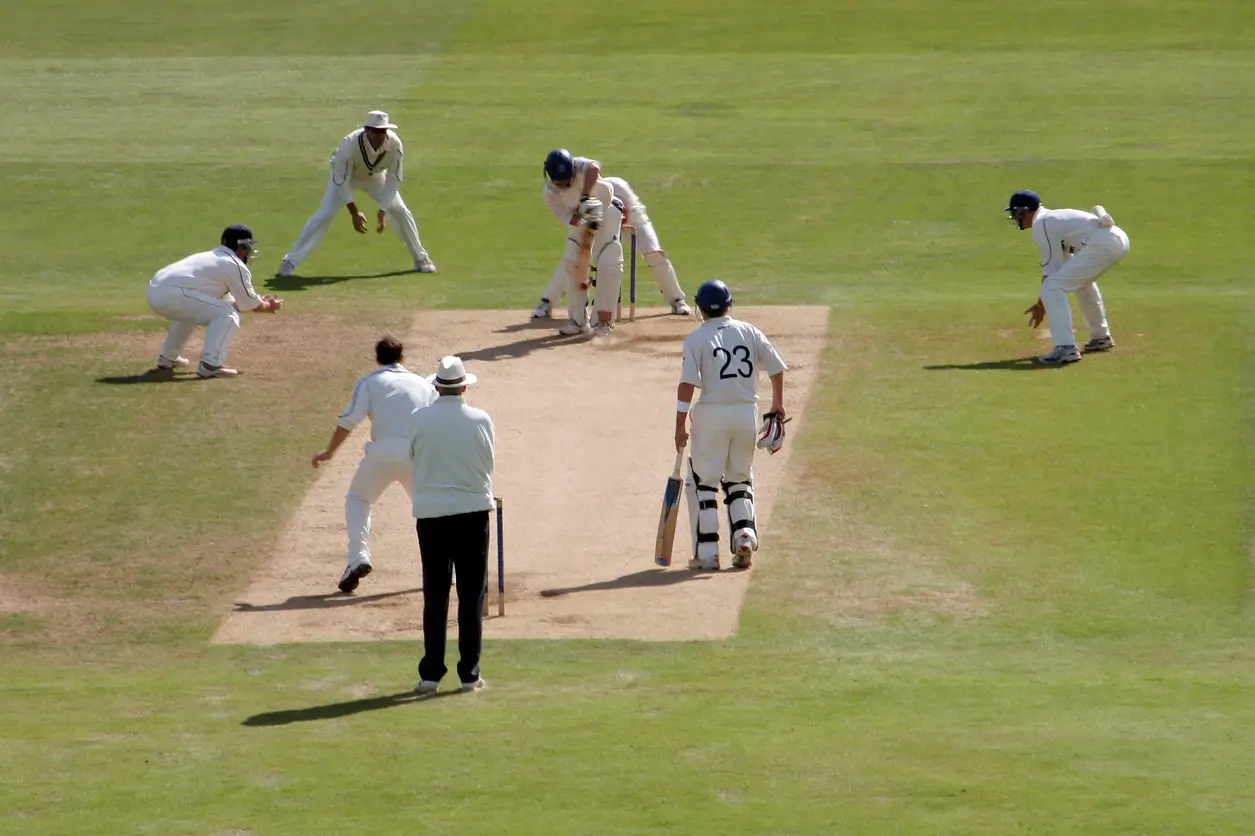
Whether you’re playing cricket or learning the basics of umpiring, there are some key cricket umpire signals to look out for and learn. In this guide, we explain what umpires do, how many there are in cricket matches, and the important signals to know.
What is a cricket umpire?
A cricket umpire is basically the referee in cricket. The umpire is an impartial official who is responsible for enforcing the Laws of Cricket, making key decisions on the field, counting deliveries and overs, and signalling events to the players and scorers.
How many umpires are there in a cricket match?
Traditionally, there are two umpires in a cricket match:
-
The bowler’s end umpire: Stands behind the stumps at the end where the bowler bowls from. Their job is to look for no-balls, wides, LBWs and appeals at that end.
-
Square leg umpire: Stands in the field in line with the batsman, opposite the crease, at square leg. It’s their job to judge run-outs, catches close to the ground, and side-of-wicket events.
The two umpires switch positions after each over. In professional cricket, there will also usually be a third umpire who watches TV monitors to check for close decisions, and a fourth umpire who runs administrative tasks and steps in if one of the umpires gets injured.
Understanding cricket umpire signals
One of the key jobs of the umpire is to signal on-field events to the players and the scorers. So, what are the main cricket umpire signals? The most important ones include:
Out – Raised finger
This is the most iconic umpire signal in cricket. Once a player is out, the umpire will raise one index finger above their head. If a player is bowled out or caught, players, scorers and fans can easily see if they’re out. But it’s the tighter and potentially more controversial calls when they will look to the umpire. This could be for LBW (leg before wicket), a catch close to the ground, a tight run-out, or when the batsman grazes the ball and is caught in the slips.
Four – Sweeping arm at waist height
When a batsman scores a boundary and the ball bounces at least once, they get four runs. The umpire signals this by sweeping their arm across their body at waist height. In professional cricket, an umpire can use a TV replay if they’re unsure whether the ball crossed the boundary. In amateur cricket, they may need to ask and trust the fielder.
Six – Both arms raised
If the batsman hits the ball over the boundary without it bouncing, they get six runs. The umpire signals this by raising both arms straight above their head. A fantastic sight for any batsman.
TV Review – Drawing a rectangle in the arm
Making the shape of a TV lets the players, fans and scorers know the umpire has asked for a TV review.
Wide – Both arms outstretched
If the bowler bowls it too wide for the batsman to reach, the umpire will call it as a wide. They do so by stretching their arms out wide. The ball doesn’t count, so the bowler must bowl it again. The batting team also earns an extra run.
No-ball – One arm held out horizontal
This is called if the bowler commits an infraction, usually by stepping over the crease when delivering the ball. If a no-ball is called, the umpire will signal by raising one arm out at shoulder height. The batsman can’t be out on a no-ball.
In Test cricket, if the bowler bowls a no-ball, they must bowl again, and a run is added to the batting team’s total. In limited overs cricket, the batting team also gets a free hit, meaning the batsman can’t be out on the next ball.
Free hit – Circling a hand above the head
If a free hit is also awarded in a limited over match, the umpire will signal it by circling their hand above their head.
Bye – One arm raised overhead
If runs are scored on a bye, the umpire will lift one arm overhead. A bye happens when the ball passes the batter and they score runs without hitting it. Basically, if the wicketkeeper misses it.
Leg bye – Tapping the leg
The batsman can score runs if the ball hits their body and not their bat. This is called a leg bye, and the umpire will signal it by tapping their leg. The ball doesn’t necessarily have to touch the leg for a leg bye, just any part of the body other than the hand.
Dead ball – Arms crossed and uncrossed
An umpire will signal a dead ball by crossing their arms below the knee and uncrossing them again. A dead ball happens when play is stopped or the ball is no longer live. This could be if the batsman steps away from the crease and isn’t ready to receive a delivery or if a player or umpire is injured. After a dead ball is called, no further action can happen.
New ball – Raising the new ball above their head
In Test cricket, the fielding side can request a new ball after 80 overs. The umpire informs the batting team and lets the scorers know by raising the ball above their head.
One short – Touching the shoulder with the hand of the same arm
If the batsman is running two or more runs but fails to make ground and puts the bat in short before the crease, the short run is cancelled. The umpire signals this by touching their shoulder with the hand of the same arm.
Last hour – Touching the wristwatch
In Test cricket the last hour begins at 5pm. The umpire signals this by holding out their arm and touching their wristwatch with their other hand. In Test cricket, 15 overs must be bowled every hour. If time has been lost during the day, sometimes this is added on at the end of the day if it’s light enough or the next day.
Penalty runs – Arm across the body on the opposite shoulder
The umpire can add five penalty runs to the batting team’s total to punish the fielding team for infractions, like damaging the pitch, tampering with the ball, time-wasting or illegal fielding. They signal this by putting their arm across their body and resting their hand on the opposite shoulder. They will usually give warnings before awarding penalty runs.
Cancel call – Touching each shoulder with the opposite hand
If the umpire makes a mistake, they can cancel their previous call by touching each shoulder with the opposite hand. You rarely see this.
Bouncer / dangerous delivery – Raising one arm
Raising one arm can signal that the ball was too high or dangerous.
Keen to learn more about cricket?
As well as understanding the various cricket umpire signals, discover more about cricket slang and read about the top female cricket commentators.
Frequently asked questions
How does an umpire signal that a batsman is out?
An umpire signals that the batsman is out by raising one index finger above their head.
Why does the umpire signal a boundary?
The umpire signals the boundary so the players and the scorers know how many runs are added to the total. It may not always be clear whether the ball crossed the boundary or bounced before doing so. The umpire clears this up with their signals.
How many umpires are there in a game of cricket?
In all levels of cricket, whether professional or amateur, there will be two on-field umpires. The bowler’s end umpire and the square leg umpire. They switch positions after each over.
How many umpire signals are there in cricket?
There are around 16-18 important on-field umpire signals in cricket.
Specialist cricket insurance by Insure4Sport
Now you’re well-versed with the cricket umpire signals you may see during a match, you’re ready to get back out onto the pitch! Before you play your next cricket game, however, you may want to consider getting specialist cricket insurance.
Specialist cricket insurance through Insure4Sport can help financially protect you against third-party claims, theft, loss or damage to any sports equipment you own, and loss of earnings should you suffer a personal injury that results in your inability to work. Get a quote online for specialist cricket insurance.
Please note the information provided on this page should not be taken as advice and has been written as a matter of opinion. For more on insurance cover and policy wording, see our homepage.
Get a quick quote for Sports Insurance
Get A QuoteRelated Posts


Insure4Sport is a
 Insurance Services product


©Copyright Ripe Thinking Limited 2026.
Insure4Sport® is a registered trademark and a trading name of Ripe Insurance Services Limited which is Authorised and Regulated by the Financial Conduct Authority No.313411. Registered office: One Stockport Exchange, Railway Road, Stockport, United Kingdom, SK1 3SW. Registered in England No. 04507332.