Sofa to Samba: The Strictly Effect
Strictly Come Dancing makes learning a new routine look like a week’s work. But away from the ballroom, getting started can take longer - and feel more physically demanding - than beginners expect.
We surveyed 100 UK dance teachers and 100 adults who started dancing in the past three years to explore what happens when inspiration meets the dance floor. With 92% of teachers reporting more beginner enquiries and bookings while Strictly is on air, we also analysed UK search trends to see which dances people want to learn.
Key findings
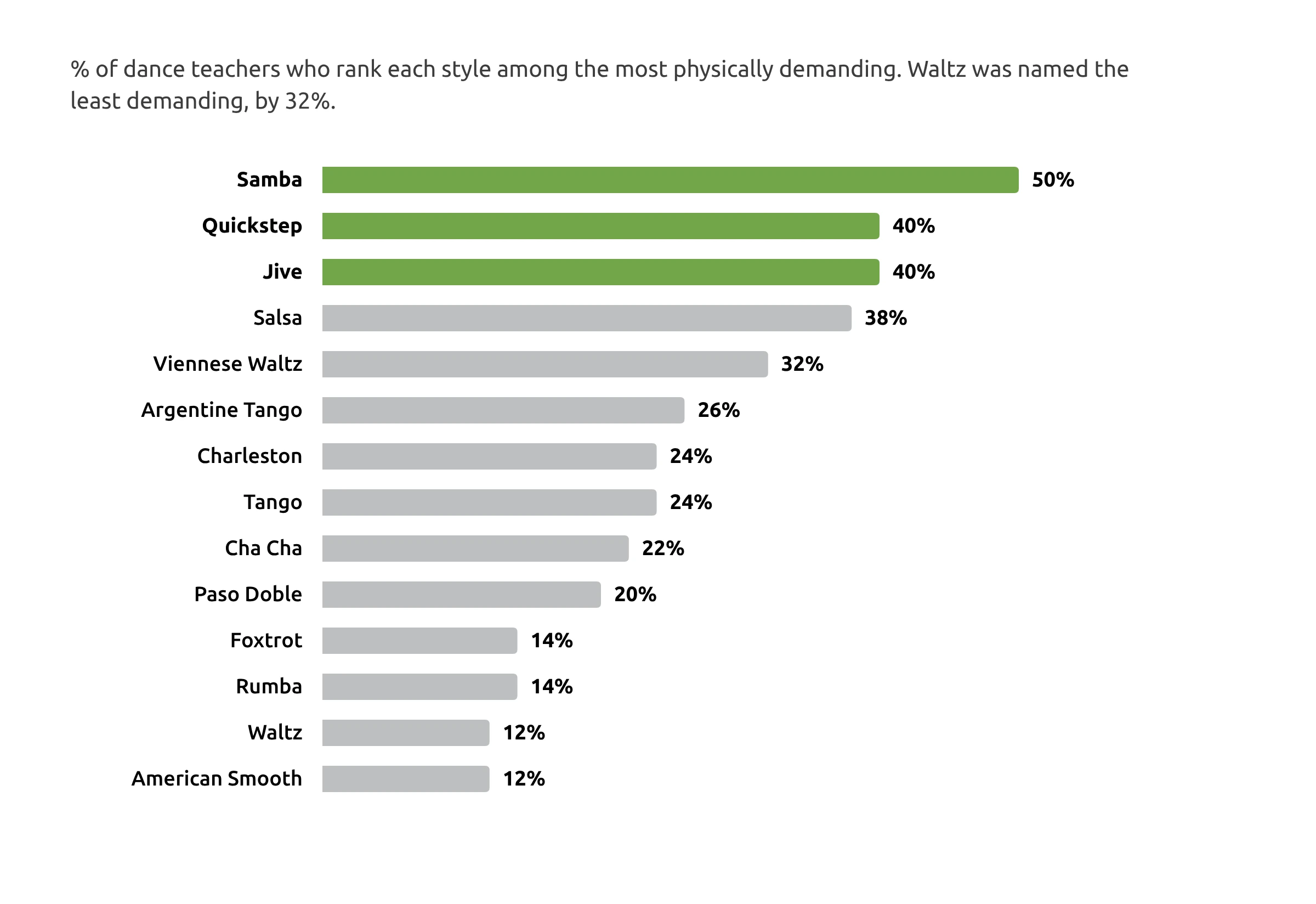
- Samba is the hardest dance on the body: 50% of UK dance teachers surveyed by Insure4Sport rank Samba among the most physically demanding dances, ahead of the Quickstep and Jive.
- The Waltz is the best dance for beginners: the Waltz was named the least physically demanding dance by 32% of UK dance teachers and 42% of new dancers.
- Strictly Come Dancing increases dance class bookings: 92% of UK dance teachers say enquiries from adult beginners rise while Strictly Come Dancing is on air.
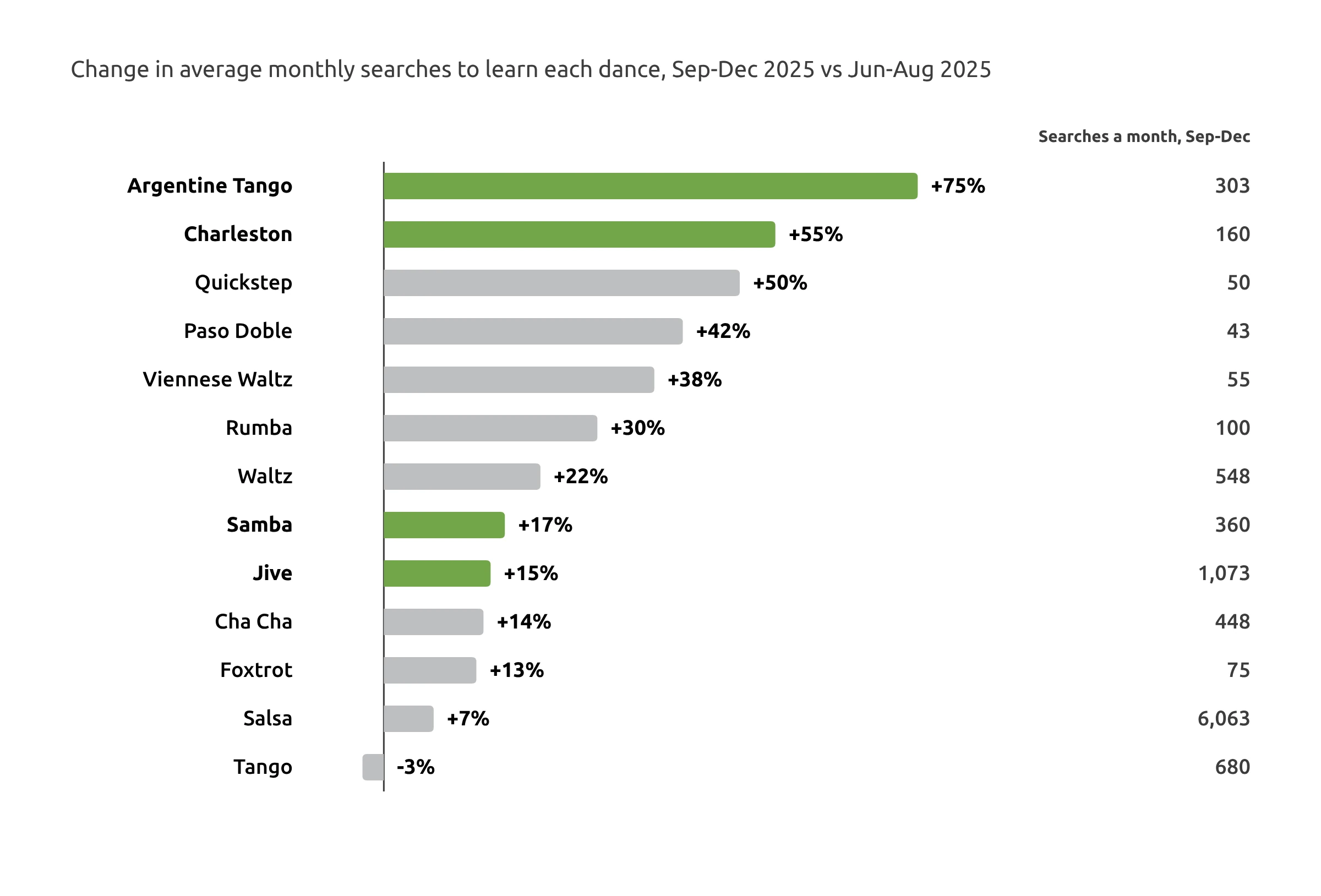
- Argentine Tango has the biggest search rise: UK searches to learn Argentine Tango rise 75% between September and December compared with the summer, the biggest increase of any Strictly dance.
- Learning to dance is harder than people expect: 76% of UK adults who started dancing in the last three years found it harder than they expected.
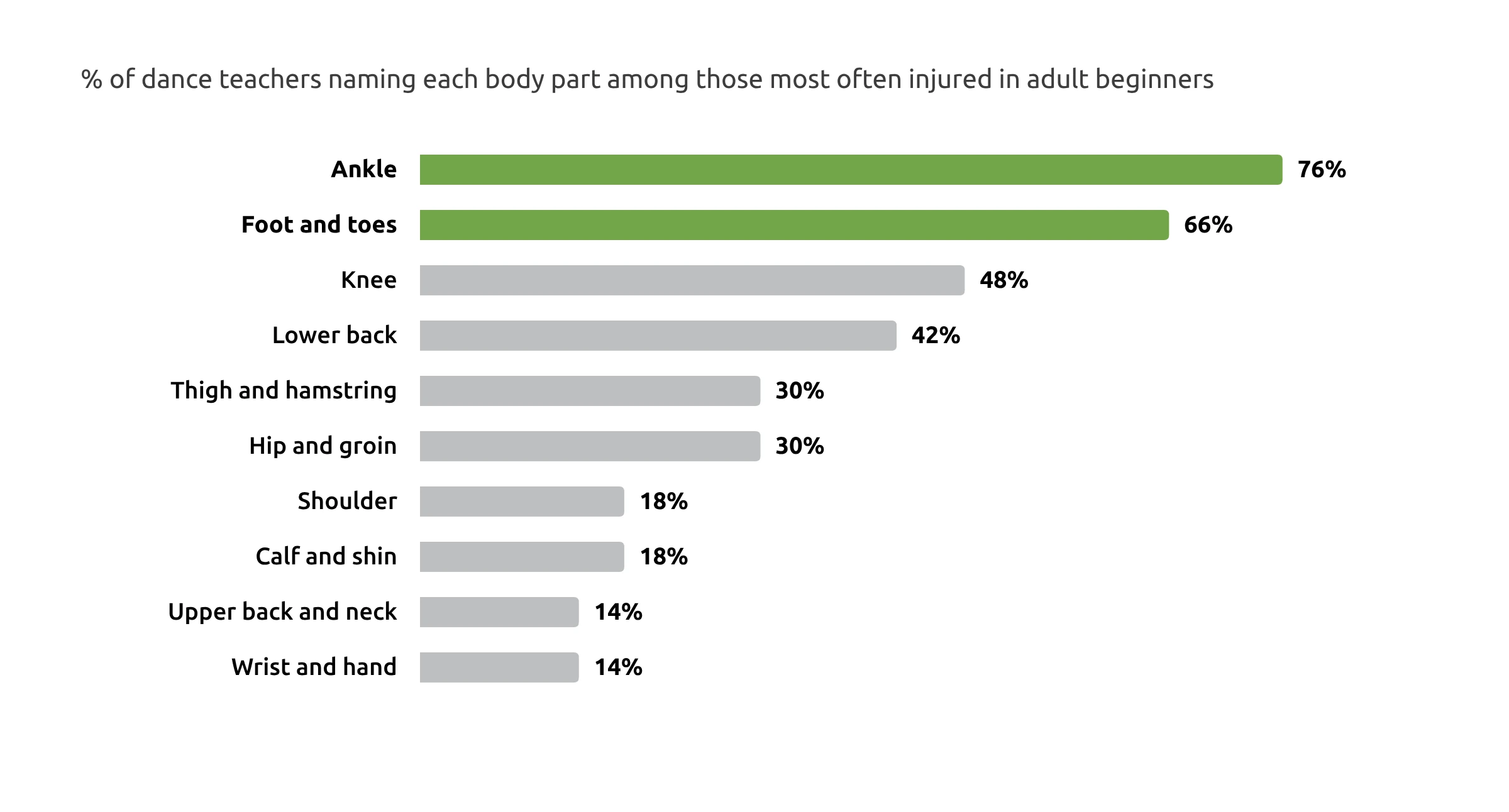
- Ankle injuries are the most common dance injury: 76% of UK dance teachers name the ankle among the body parts most often injured in adult beginners, and 72% say wrong footwear is a leading cause.
Which dance is the hardest on your body?
Samba tops the list. Half of the dance teachers we surveyed (50%) rank it among the most physically demanding dances, thanks to its constant bounce action, fast hip movement and travelling steps that load the ankles, knees and lower back. The Quickstep and Jive follow joint second (40% each), both fast, high-energy dances full of kicks, hops and flicks.
New dancers say Salsa feels toughest: 62% rank it among the most demanding, ahead of Samba (44%), the Quickstep and the Jive (38% each).
At the other end of the spectrum, the Waltz was named the least physically demanding dance by 32% of teachers and 42% of new dancers. Its faster cousin is a different story: among ballroom and Latin teachers, the Viennese Waltz ties with Samba as the toughest dance of all (58% each).
The dances Britain wants to learn vs the ones that hurt
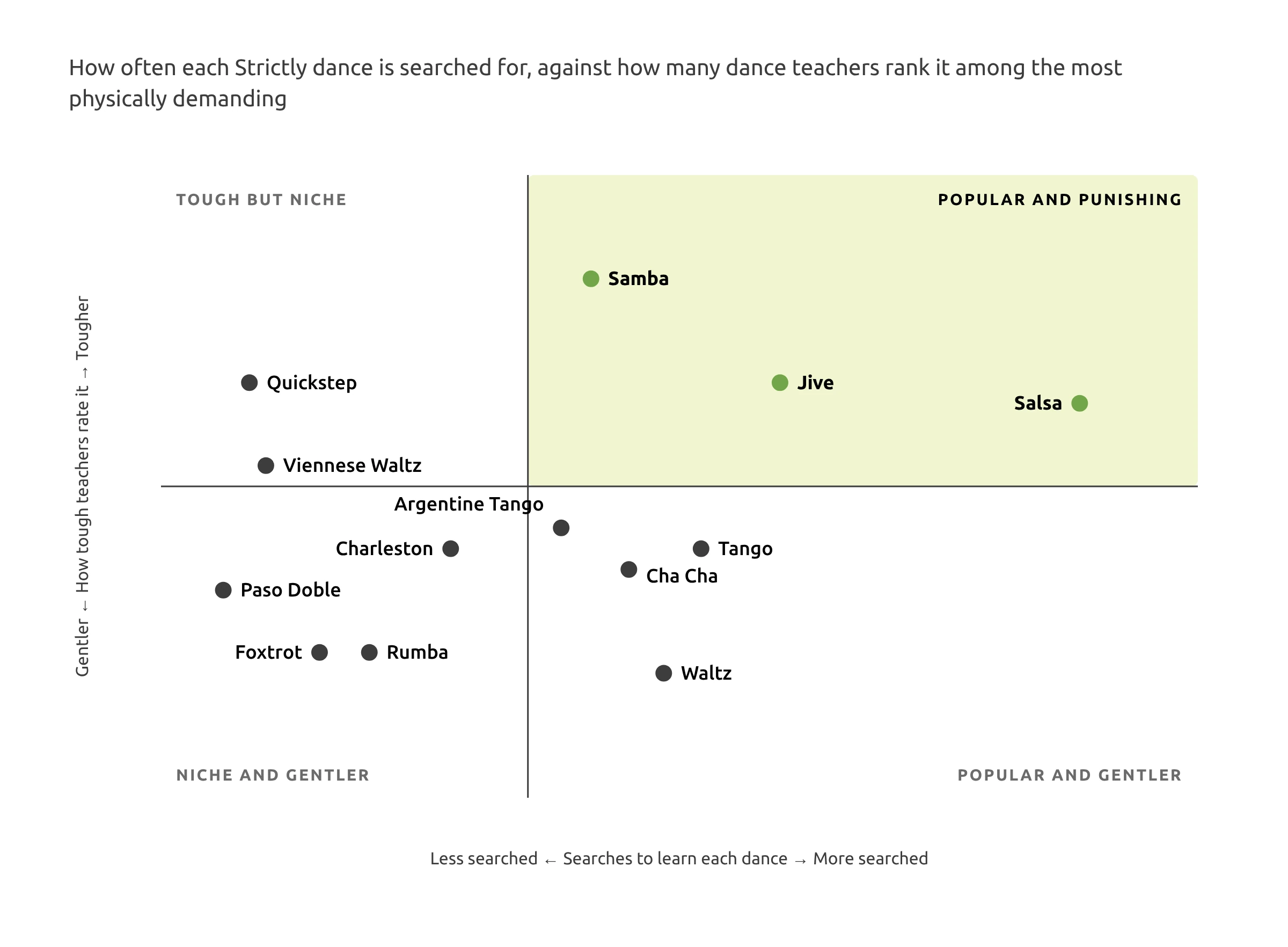
We plotted how often each Strictly dance is searched for in the UK during Strictly season against how demanding teachers say it is. The results split the dances into four groups, and the most popular dances are not the gentle ones.
Popular and punishing
Salsa, Jive and Samba. The most searched dances are also among the hardest on the body, so build up slowly.
Popular and gentler
Waltz, Tango and Cha Cha. Plenty of interest and a kinder place for beginners to start.
Tough but niche
Quickstep and Viennese Waltz. Fewer people search for them, but teachers rate them highly demanding.
Rising fast
Argentine Tango and the Charleston show the biggest jump in searches during Strictly season.
The Strictly Effect: how the show fills dance studios
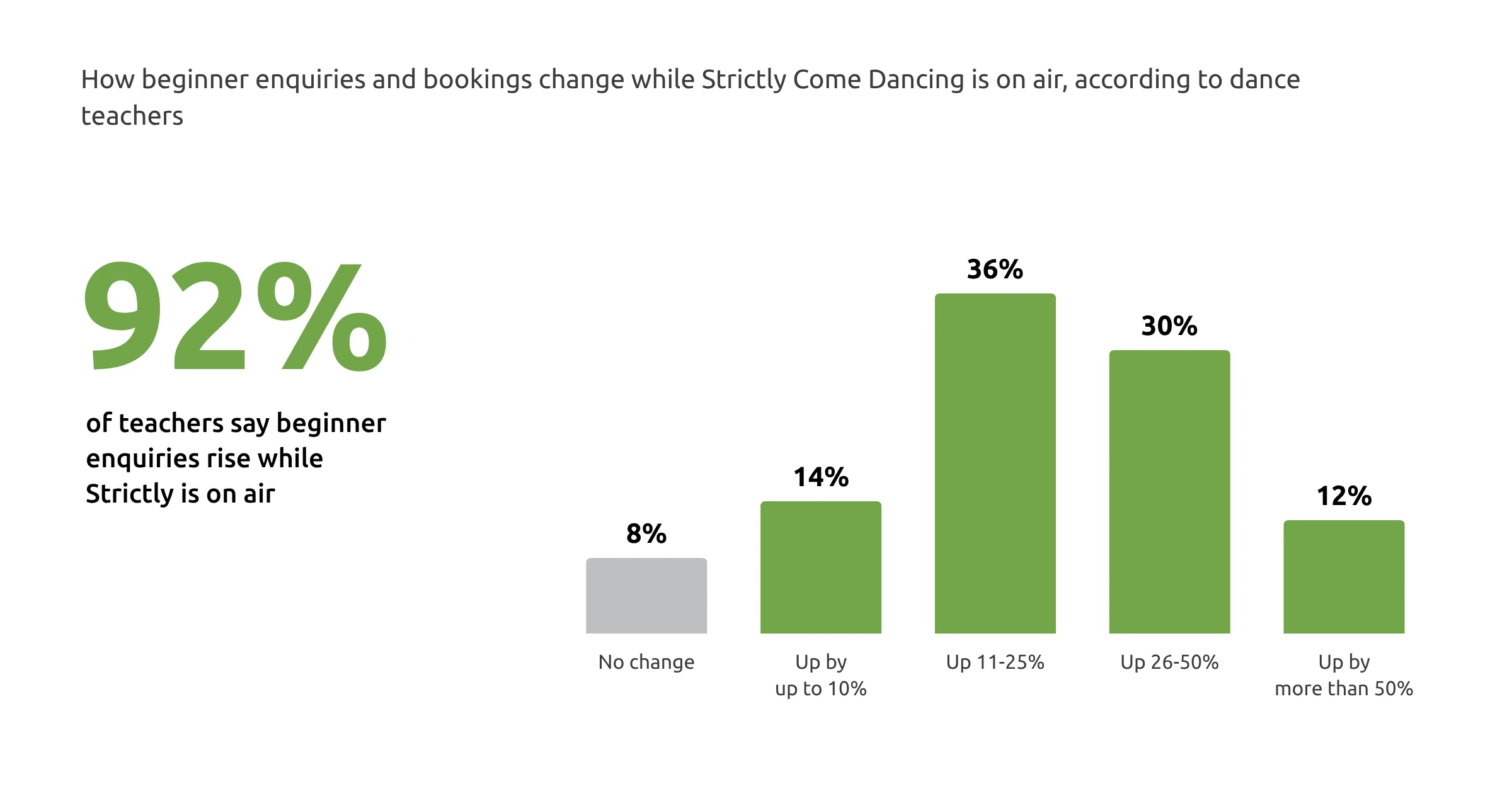
Strictly does more than fill Saturday nights. 92% of dance teachers say enquiries and bookings from adult beginners rise while the show is on air. More than four in ten (42%) say they rise by over a quarter, and one in eight (12%) say they rise by more than half.
Argentine Tango is the dance people most want to learn
Google search data tells the same story. UK searches to learn the dances seen on the show rise during Strictly season, led by Argentine Tango (up 75%) and the Charleston (up 55%). Salsa remains Britain's most searched dance to learn by far, at around 6,000 searches a month, while the Jive is the most searched of the classic ballroom and Latin dances, at more than 1,000 a month.
And the interest doesn’t end with the final. Searches to learn Salsa, the Waltz and the Quickstep all peaked in January 2025, as new year resolutions take over from the glitterball.
How long does it take to learn a Strictly dance routine?
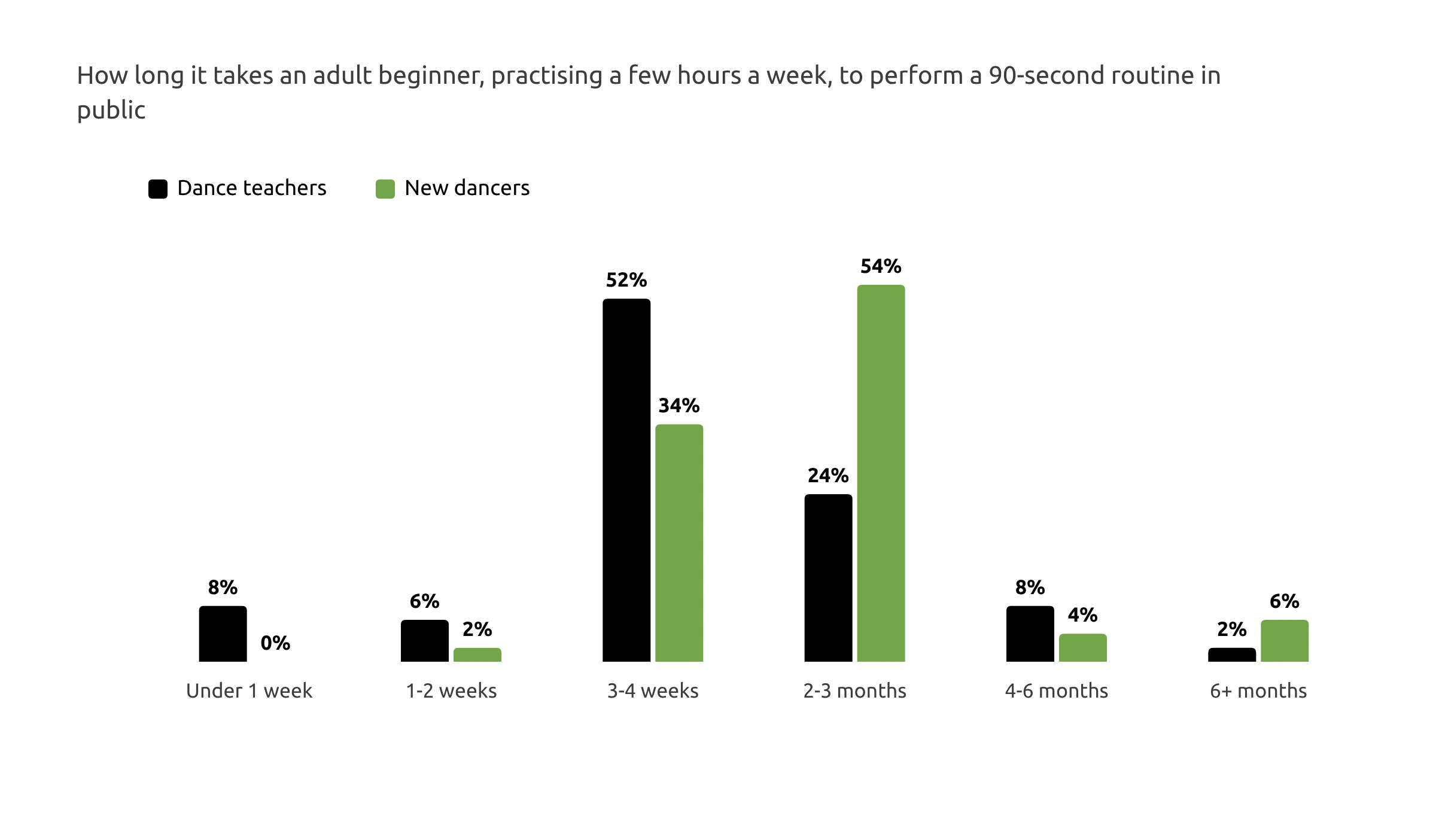
On TV, celebrities learn a new routine in about a week. Teachers say real beginners need much longer. More than half (52%) say an adult beginner practising a few hours a week needs three to four weeks to perform a 90-second routine in public, and a third (34%) say it takes two months or more.
New dancers, who've been through it themselves, say it takes longer still. Almost two-thirds (64%) say it takes two months or more, and almost all (98%) say it takes at least three weeks. Three-quarters (76%) found learning to dance harder than they expected, and 28% found it much harder.
It's no surprise, then, that 80% of teachers and 66% of new dancers say TV dance shows make learning to dance look easier than it is. Both groups agree on one thing above all: 94% of teachers and 94% of new dancers say most people underestimate how physically demanding dancing is.
The most common dance injuries for beginners
More than half of dance teachers (56%) see an adult beginner pick up an injury or pain at least once a month, and one in four see it every week. New dancers feel it too: 74% have had aches or an injury from dancing, and 12% needed time off to rest. Ankles (76%) and feet and toes (66%) are the body parts teachers see affected most often, followed by knees (48%) and the lower back (42%).
The footwear blind spot
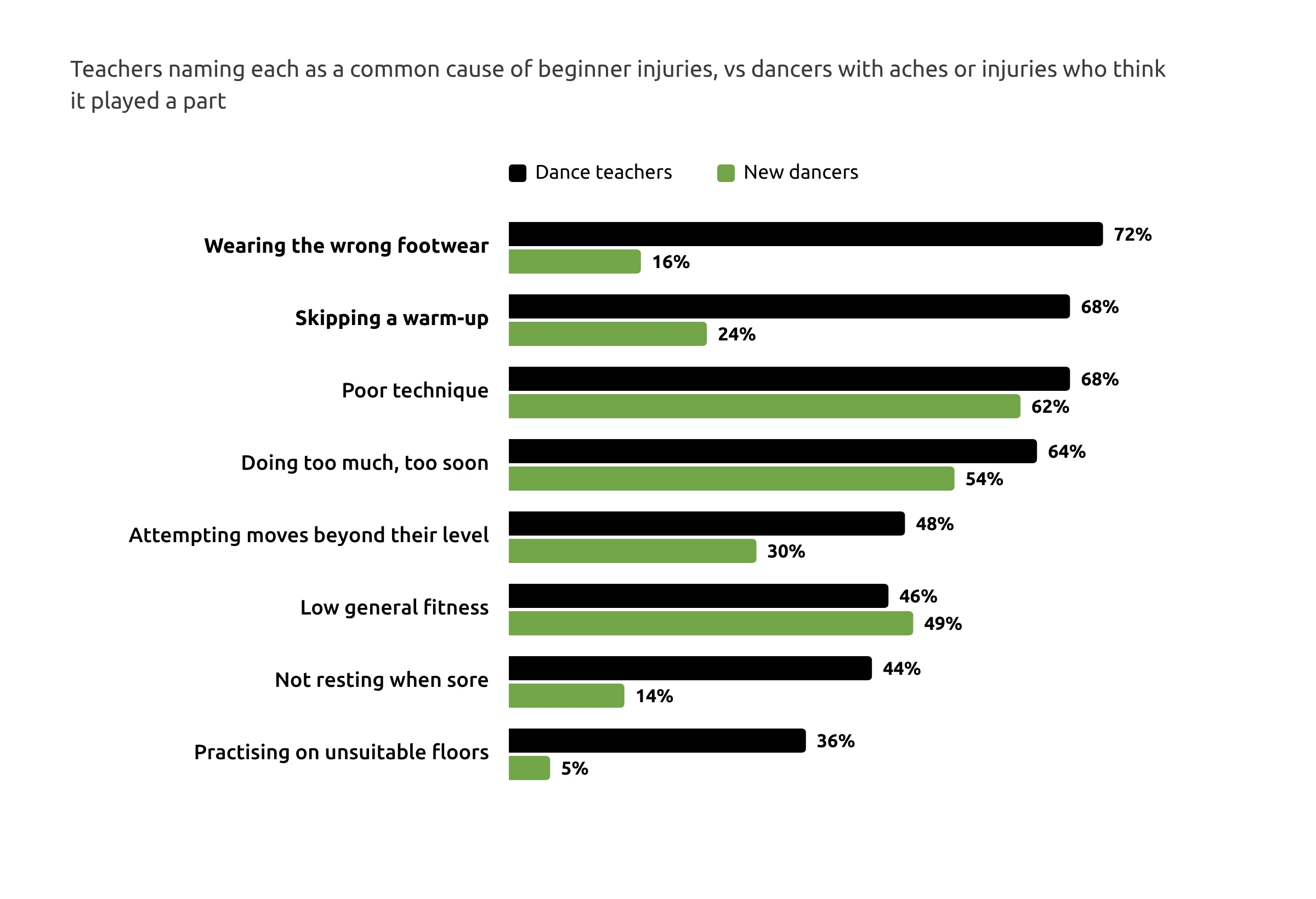
The biggest cause of beginner injuries is the simplest to fix, but most dancers don't realise it. 72% of teachers say wearing the wrong footwear is one of the most common causes of beginner injuries, yet only 16% of new dancers who've had aches or injuries think their footwear played a part. It's a similar story with warm-ups: 68% of teachers name skipping a warm-up as a common cause, compared with 24% of dancers.
Dancers are more likely to blame their technique (62%) or doing too much, too soon (54%), and on those points they and their teachers agree.
Warm-ups are where most beginners fall down. 62% of teachers say at least three-quarters of adult beginners arrive without warming up, rising to 87% among teachers with more than ten years' experience.
Partner dances carry more risk
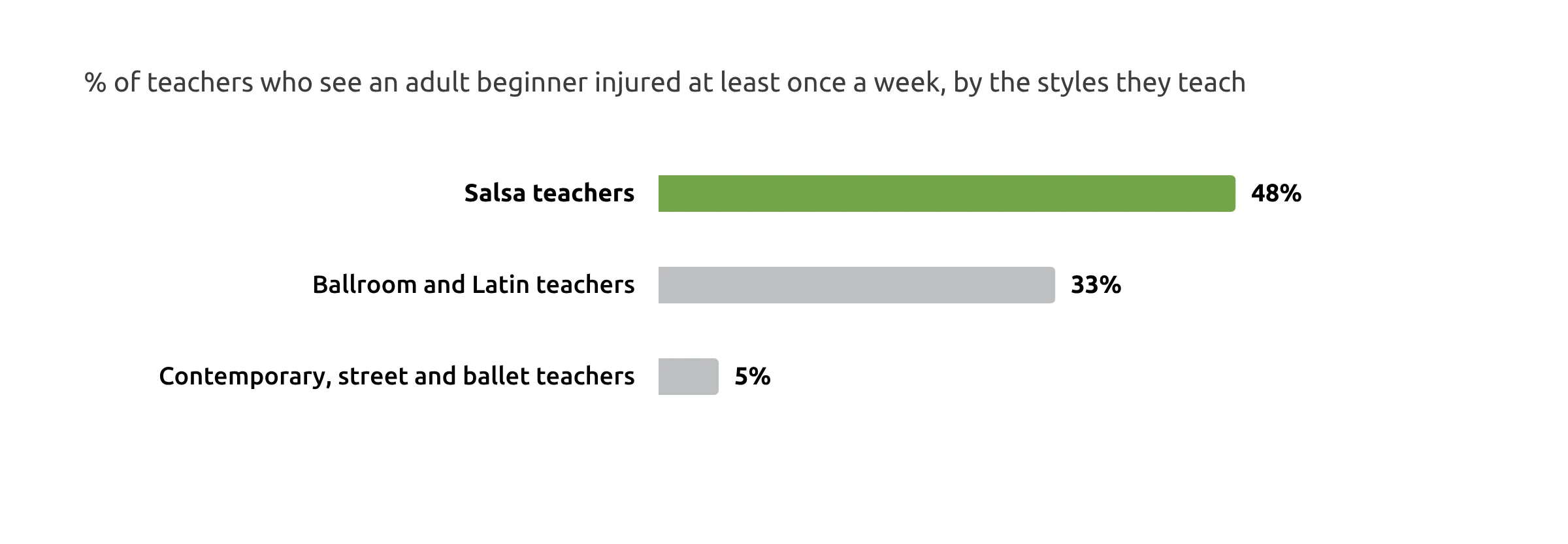
Teachers of partner dances see injuries far more often. Nearly half of salsa teachers (48%) see a beginner injured every week, compared with just 5% of contemporary, street and ballet teachers.
With Salsa the most searched dance to learn in the UK, that makes a careful start especially important.
What teachers and dancers told us about injuries
"An ACL tear from a samba. The person got their heel caught in their partner's trousers."
- Dance teacher
"A woman in her late 40s came to the class expecting to learn a full performance within two weeks. She didn't warm up properly before sessions. Within the first two weeks she sprained her ankle so badly that we had to call an ambulance."
- Dance teacher
"A beginner rolled their ankle during a quick turn in rubber-soled trainers that stuck to the wooden floor."
- Dance teacher
"What surprised me the most is how tiring it is on my feet and legs, especially fast dances like the Jive, which looks effortless on TV."
- New dancer
"It surprised me how quickly I was getting out of breath, even in a beginner class."
- New dancer
The Sofa to Samba starter plan: how to start dancing safely
Inspired to get off the sofa? Based on what teachers and dancers told us, here's how to make your first few weeks count without ending up on the side lines.
1. Start with a gentler dance
The Waltz, Rumba and Foxtrot are rated among the least demanding. Save the Samba and Quickstep until you've built some fitness.
2. Get the right shoes
Wrong footwear is the top cause of beginner injuries, but only 1 in 6 dancers with aches or injuries think their shoes played a part. Ask your teacher what to wear, and avoid trainers with grippy rubber soles on wooden floors.
3. Never skip the warm-up
Arrive a few minutes early and get your ankles, calves and hips moving before you start.
4. Give it time
Teachers say a routine takes a beginner at least three to four weeks, and most new dancers say it takes two months or more. Doing too much, too soon is one of the biggest injury risks.
5. Leave the lifts to the pros
Copying moves from TV or social media is a common cause of injury. Learn the basics in class first.
6. Rest when you're sore
Dancing through pain turns a small strain into weeks off. Tell your teacher if something hurts.
Teaching the Strictly rush this season?
More beginners means more risk. Insure4Sport's dance instructor insurance helps protect you if a student is injured in your class or you can't teach because of an injury. Get a dance instructor quote today.
Frequently asked questions
What is the hardest Strictly dance on your body?
Samba. Half of the UK dance teachers we surveyed (50%) rank it among the most physically demanding dances, followed by the Quickstep and Jive (40% each).
What is the best dance for beginners?
Teachers and new dancers both rate the Waltz as the least physically demanding dance (32% and 42%). It's a good place to build confidence before trying faster styles.
What are the most common dance injuries?
Teachers say the ankle (76%) and foot and toes (66%) are most often injured in adult beginners, followed by the knee (48%) and lower back (42%). Twisted and sprained ankles are the injuries teachers mention most.
How long does it take to learn a dance routine?
Most teachers (52%) say an adult beginner practising a few hours a week needs three to four weeks to perform a 90-second routine in public. New dancers say it takes even longer: 64% say two months or more.
Is learning to dance harder than it looks?
Yes. 76% of new dancers found learning to dance harder than they expected, and 94% of both teachers and dancers say most people underestimate how physically demanding it is.
Does Strictly Come Dancing make more people take up dancing?
Yes, according to teachers. 92% say enquiries and bookings from adult beginners rise while the show is on air, and UK searches to learn dances such as Argentine Tango and the Charleston rise sharply during the series.
How can I avoid injury when I start dancing?
Wear the right shoes, always warm up, start with a gentler dance, build up gradually and rest when you're sore. These address the most common causes of beginner injuries teachers reported.
Methodology
Insure4Sport surveyed 100 UK dance teachers and 100 UK adults who had started dancing in the last three years, both via Askable in October 2026.
Search data is taken from Google Keyword Planner and covers UK searches containing learning terms (classes, lessons, learn, how to and beginners) for each dance style between September 2024 and August 2026.
Strictly season uplift compares average monthly searches in September to December 2025 with June to August 2025. This research is independent and not affiliated with or endorsed by the BBC.