
What is the average cycling speed? And how to improve yours
06 May 2026
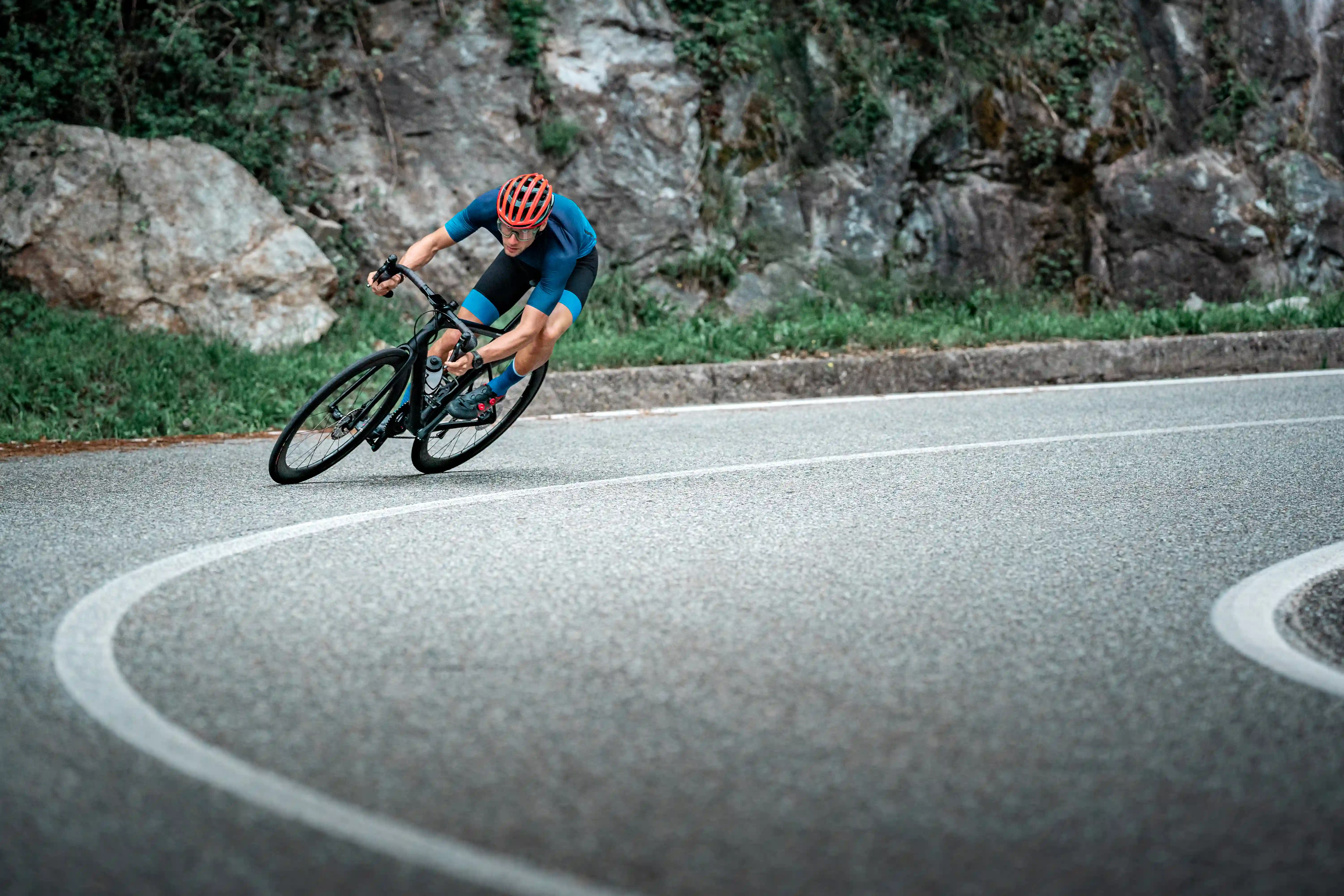
Whether you’re trying to improve your own average cycling speed or just want to see how you compare with the average speed of experienced and professional cyclists, any average speed should be taken with a pinch of salt. This is because so many factors can affect your speed, making it difficult to make a fair comparison. However, tracking your average cycling speed can help you monitor your progress as a cyclist.
In this blog, we’ve covered what the average cycling speed is for different skill levels, what factors may affect your average cycling speed, and how you can improve yours.
The average cycling speed by skill level
If you’re looking for a rough guide, we’ve covered the average cycling speed for varying skill levels below.
- The average beginner cycling speed: 10-12 mph
- The average cycling speed of an experienced cyclist: 12-20 mph
- The average cycling speed for a professional cyclist: 20+ mph
- The average cycling speed at the Tour de France: 25-27 mph
Factors that affect your average cycling speed

As we’ve mentioned, there are several factors that can affect your average cycling speed. These can include:
1. Weather conditions
The key considerations here are wind, temperature, and rain. Strong wind can affect your speed and handling, depending on its direction. High temperatures can make you feel fatigued faster, while cold conditions can slow your muscles' warm-up.
Lastly, you may find that rain reduces traction on the road and can cause discomfort if your clothes become wet, both of which could affect your performance and average cycling speed.
2. Terrain
This will likely come as no surprise, but the terrain you’re riding on can also greatly affect your average speed. If you’re riding through the Peak District, for example, you’ll be slowed by gravity on the way up the hills, and it’ll speed you up on the way down. Flat terrain is ideal for the most consistent speeds, but tackling more varied terrain can help you become a better overall cyclist.
3. Equipment and bike type
Of all the equipment you use on your rides, your bike type has the greatest impact on your average speed. Whether you’re using a road, hybrid, mountain, or gravel bike can affect factors such as your aerodynamics, rolling resistance, and the bike's overall weight. Generally speaking, the lighter and more aerodynamic the bike, the faster you’ll be able to go.
4. Distance ridden
Another big factor that can affect your average cycling speed is the distance of your rides. For shorter rides, you will likely be able to hold a higher speed than if you’re going on longer rides.
Both shorter and longer rides can be useful in helping you to perform better as a cyclist, as you can focus solely on speed for shorter rides and improve your endurance with longer routes.
5. Age and experience
While not set in stone, most people experience their peak cycling performance between the ages of 20 and 35. This is due to having better aerobic capacity and stronger muscles, which can still recover quickly after exercise.
Your experience and fitness level also play a part in the average cycling speeds that you’ll be able to achieve. The more experienced cyclist will often have better knowledge of how to use their gears, body positioning, and pacing for optimal efficiency and speed.
How do I increase my average cycling speed?

If you want to work on improving your average cycling speed, we’ve compiled four tips to get you started.
1. Try new training techniques
The number one way to improve your average cycling speed is by training. Training will improve your experience and fitness, both of which can positively impact your average speed. Trying new training techniques and ensuring your training is varied can also help, such as alternating between endurance, intervals, and sprints.
It doesn’t need to focus solely on cycling either; other fitness activities, such as yoga for flexibility and gym training to improve your strength, can also help improve your speed. On top of all the above, prioritising a healthy diet and hydration will ensure you’re ready to perform at your best whenever you head out on your bike.
2. Change your riding position
Another way to improve your average cycling speed is to adjust your riding position for better aerodynamics. A more aerodynamic riding position involves leaning forward with elbows tucked in at your sides. If you’re practising for time trials, riders will often flatten their backs completely to be as aerodynamic as possible.
Learning to ride in this position can be challenging, especially for beginners, as you have less control over the handlebars. It’s best to practice holding this position in intervals to get used to the position over time.
3. Utilise bike computers and cycling apps
Using bike computers, power meters, and cycling apps can help you get a better overall sense of your performance and how it changes over time. You can track additional metrics, such as your heart rate, power, and cadence, along with your speed.
You can then use these metrics to identify weak spots in your cycling technique, which can in turn help improve your average cycling speed as you work on them.
4. Take part in group rides
Not only does taking part in group rides offer a different experience while you train, but it can also help improve your speed. When you ride behind a group of cyclists, they take the brunt of the wind, which means you have reduced drag.
Riding in a group can also be more motivating than riding solo, encouraging you to push yourself further and challenge what you think you can achieve.
Average cycling speed: FAQs
What average speed does Google Maps use for cycling?
Generally, Google Maps estimates that a cyclist is travelling at 10mph on flat terrain and will adjust this if the terrain is varied or if there are other obstacles you may need to stop for, such as road crossings.
Is biking 10 mph fast?
If you’re a casual or beginner rider, this is the average speed for a cyclist at this skill level, neither fast nor slow. If you’re a more experienced rider, you would expect to be travelling at a faster average speed than this on flat terrain.
What is the 75% rule in cycling?
The 75% rule refers to the approach that many riders take to their training. Meaning, 75% of your training should be at an easy or more casual pace, and the other 25% should be at maximum effort. This helps build strength, endurance, and speed, making you a better all-around rider.
Specialist cycling insurance through Insure4Sport
Now you know the average cycling speed and how to improve yours, you may want to consider getting specialist cycling insurance before you head out on your next ride. Specialist cycling insurance can help provide financial protection for you and your cycling equipment.
Find out more about specialist cycling insurance through Insure4Sport or get an online quote today.
Please note the information provided on this page should not be taken as advice and has been written as a matter of opinion. For more on insurance cover and policy wording, see our homepage.
Get a quick quote for Sports Insurance
Get A QuoteRelated Posts
Insure4Sport is a
 Insurance Services product


©Copyright Ripe Thinking Limited 2026.
Insure4Sport® is a registered trademark and a trading name of Ripe Insurance Services Limited which is Authorised and Regulated by the Financial Conduct Authority No.313411. Registered office: One Stockport Exchange, Railway Road, Stockport, United Kingdom, SK1 3SW. Registered in England No. 04507332.