
12 hip opening yoga poses to try with your next class
10 July 2026
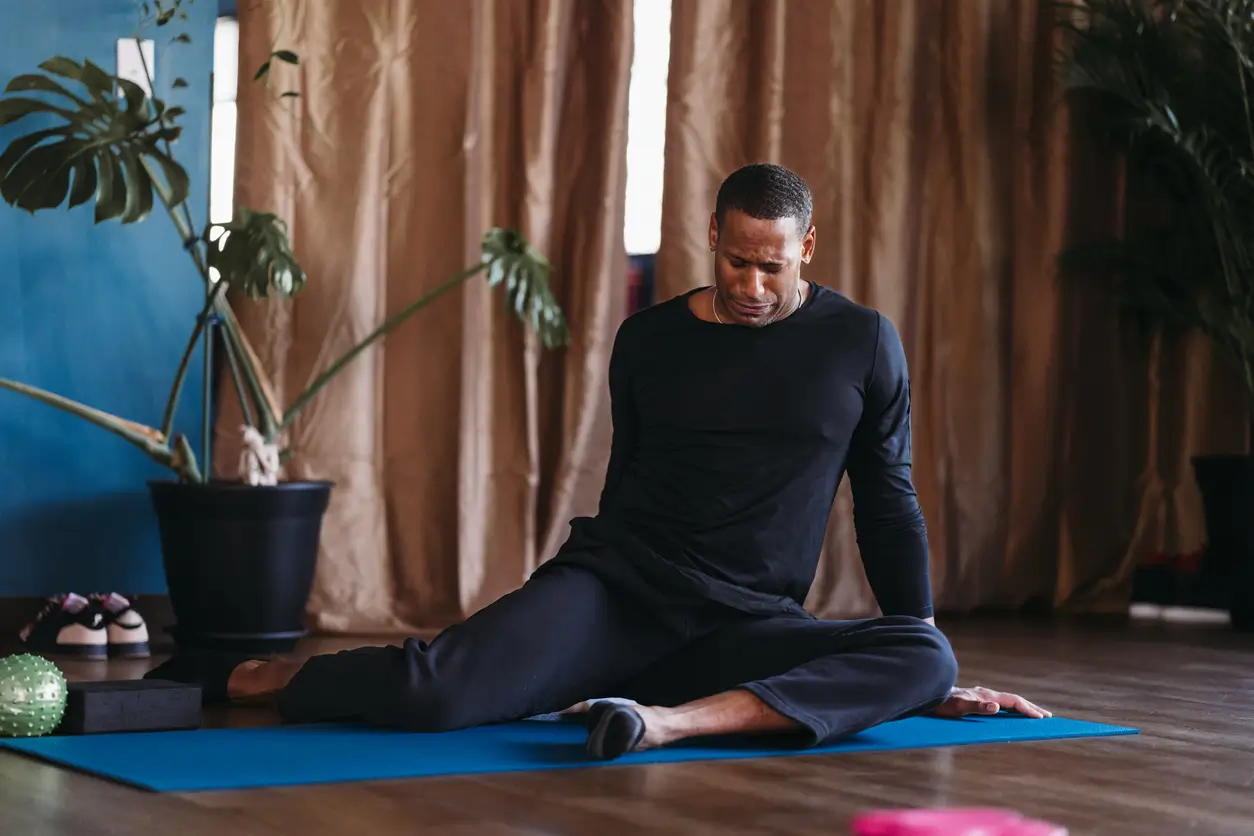
Tight hips are one of the most common complaints among yoga students and are often caused by long periods of sitting or repetitive movement. Hip opening yoga poses can help with this. These poses are designed to improve mobility, flexibility, and comfort over time. You can build them into your next class to assist your students with any hip problems they may have.
When trying different hip opening yoga stretches, it’s important to help your students work within their range of movement. This will help them get the most out of the pose and lower the risk of injury.
In this guide, we share 12 poses to help open up the hips. We’ll run through how to perform them and detail their benefits.
Why do we get tight hips?
There are lots of things that can lead to tight hips. From driving and sitting for long periods to running, cycling, and strength training. These are things that many of us likely do all the time, but can result in our hips becoming stiff. Age-related mobility loss can also result in tight hips, making stretching them important at all ages.
Hips contain some of the body's strongest muscles and connective tissues. Regular hip opening stretches and yoga practice can help to maintain healthy movement.
Understanding the different parts of the hip
Hips have many different parts and understanding these can help you to stretch efficiently.
Hip joint
This is a ball-and-socket joint that allows your leg to move in different directions while supporting your weight.
Main muscles
The main muscles in the hip include:
- Hip flexors – A group of muscles at the front of the hip that lift the knee and help you bend at the waist
- Glutes – The muscles of the buttocks that stabilise your pelvis and generate strength for walking, running, and standing
- Piriformis – A small muscle deep within the buttock that helps rotate your hip and supports pelvic stability
- Tensor fasciae latae (TFL) – A muscle on the outer hip that works with the iliotibial (IT) band to steady your hip and knee during movement
- Adductors – The inner thigh muscles responsible for drawing the legs towards the body's midline and supporting balance
- Abductors – A collection of muscles on the outer hip that move your leg away from your body and help keep your pelvis level when standing on one leg
- Deep external rotators – A group of small muscles beneath the glutes that rotate your thigh outward and provide stability to the hip joint
Supporting structures
Your hips also contain a range of supporting structures, including:
- Ligaments – Strong bands of connective tissue that support your hip joint by linking the thigh bone to the pelvis
- Tendons – Tough cords that attach muscles to bone, transferring force to create smooth and controlled movement
- Joint capsule – A protective sleeve surrounding the hip joint that contains lubricating fluid and helps maintain stability
- Fascia – A network of connective tissue that wraps around muscles and other structures, helping them move efficiently while providing support
Why is it important to open the hips?
Opening the hips can help with:
- Better mobility – Hip opening yoga poses can improve movement and posture
- Reduced lower back discomfort – Stiff hips can make other parts of the body, like the lower back, feel strained and uncomfortable
- Improved yoga practice – It can help make seated poses, twists, and balancing postures easier
- Better athletic performance – Yoga hip stretches are useful for runners, cyclists, and gym-goers as stiffness can negatively impact performance
- Reduced injury risk – A better range of motion can help to reduce your risk of injury
- Stress relief – Many people feel relaxed after performing hip opening yoga poses
Top 12 hip-opening yoga poses
Here are 12 yoga poses that can help you open the hips:
1. Butterfly Pose (Baddha Konasana)
Butterfly Pose opens the inner thighs, improves hip mobility, and is a great hip stretch for beginners. Sit on the floor with the soles of your feet together and let your knees fall to the sides. Hold your feet or ankles and lengthen through your spine without rounding your back.
2. Low Lunge (Anjaneyasana)
A low lunge is great for opening the hip flexors and building stability. Step one foot forward into a lunge and lower your back knee to the mat. Slide the back leg behind you until you feel a stretch through the front of the hip, then lift your chest and put your hands onto your front thigh or raise them overhead.
3. Pigeon Pose (Eka Pada Rajakapotasana)
Pigeon Pose provides a deep external hip stretch while targeting the glutes and piriformis. Go onto all fours, bring your right knee towards your right wrist and angle your shin comfortably across the mat. Extend your left leg straight behind you, square your hips as much as possible, and either remain upright or gently fold over your front leg. Repeat on the other side.
4. Figure Four Stretch
A gentle alternative to the Pigeon Pose, the Figure Four Stretch is a lovely hip opening yoga pose for beginners. Lie on your back with both knees bent and place one ankle across the opposite thigh, just above the knee. Thread your hands behind the supporting leg and draw it towards your chest until you feel a stretch in the outer hip.
5. Garland Pose (Malasana)
Garland Pose opens the hips and groin while improving ankle mobility. Stand with your feet slightly wider than your hips and turn your toes out slightly. Lower into a deep squat, keeping your heels grounded if possible, and bring your palms together at your chest while gently pressing your elbows against your inner knees.
6. Happy Baby Pose (Ananda Balasana)
Happy Baby Pose provides a gentle hip opener stretch and releases the lower back. Lie flat on your back and draw your knees towards your chest. Reach for the outside edges of your feet or hold your ankles, then guide your knees towards the floor on either side of your torso while keeping your lower back relaxed. You can hold the back of your thighs instead if you find it tricky to reach your feet.
7. Frog Pose (Mandukasana Variation)
Frog Pose is ideal for a deep adductor stretch. Go onto all fours and slide your knees apart as far as feels comfortable. Keep your ankles in line with your knees, lower onto your forearms if suitable, and let your hips sink gradually without forcing the stretch.
8. Lizard Pose (Utthan Pristhasana)
Lizard Pose stretches the hip flexors, hamstrings, and groin. From a lunge, place both hands inside your front foot and slowly walk the foot slightly wider if needed. Extend your back leg behind you and stay on your hands or lower onto your forearms for increased intensity.
9. Wide-Legged Forward Fold (Prasarita Padottanasana)
A Wide-Legged Forward Fold can stretch the adductors, hamstrings, and spine. Stand in a wide stance with your feet parallel or slightly turned in. Hinge forwards from your hips with a long spine, placing your hands on the floor, blocks, or your legs while allowing the crown of your head to move towards the mat. Ensure that you keep your weight evenly distributed throughout the pose.
10. Bound Angle Forward Fold
The Bound Angle Forward Fold is a progression from Butterfly Pose and offers a deeper stretch. From Butterfly Pose, keep your spine long and slowly lean forwards from your hips rather than your waist. Stop when you feel a comfortable stretch through your inner thighs and hips.
11. Fire Log Pose (Agnistambhasana)
Fire Log Pose offers a deep outer hip stretch. Sit with one shin stacked on top of the other so that each ankle is positioned above the opposite knee where possible. Flex your feet to protect your knees, sit evenly through both sitting bones, and remain upright or lean forwards slightly.
12. Reclining Bound Angle Pose (Supta Baddha Konasana)
Reclining Bound Angle Pose is a restorative stretch that offers gentle hip opening and relaxation, making it perfect for the end of a yoga class. Lie on your back and bring your soles together, allowing your knees to relax out to either side. Rest your arms wherever feels natural and, if needed, support your thighs with blocks or cushions to encourage relaxation.
Hip opening yoga poses FAQs
How often should you practice hip opening yoga?
It’s good to practice hip opening yoga two or three times per week if possible.
Are hip opening stretches suitable for beginners?
Yes, most hip opening stretches are suitable for beginners. You can make modifications to make sure the poses feel comfortable.
Which yoga pose opens the hips the most?
Pigeon, Frog, Lizard, and Butterfly all target different muscles, so it’s a good idea to perform a variety of poses to ensure your hips are stretched effectively.
Can hip opening yoga help lower back pain?
Improving hip mobility may reduce lower back pain for some people, although you should discuss persistent or severe pain with a professional.
What are some common hip opening mistakes?
There are several common mistakes people can make when performing hip opening stretches. For example, pushing too deeply, holding the breath, rounding the spine, ignoring discomfort, skipping warm-ups, and moving too quickly.
How can hip opening stretches be taught safely?
When teaching hip-opening yoga stretches, ensure your students warm up first, use props where needed, and understand that it’s important to breathe steadily and work within their own range of motion.
Specialist yoga insurance through Insure4Sport
Whether you’re an experienced instructor or new to yoga, you may want to consider financially protecting yourself with specialist yoga insurance.
Unfortunately, as with most sports, yoga carries the risk of suffering an injury, which could not only stop you from exercising but also affect your ability to work for a period. You can get an instant online quote today.
Please note the information provided on this page should not be taken as advice and has been written as a matter of opinion. For more on insurance cover and policy wording, see our homepage.
Get a quick quote for Sports Insurance
Get A QuoteRelated Posts


Insure4Sport is a
 Insurance Services product


©Copyright Ripe Thinking Limited 2026.
Insure4Sport® is a registered trademark and a trading name of Ripe Insurance Services Limited which is Authorised and Regulated by the Financial Conduct Authority No.313411. Registered office: One Stockport Exchange, Railway Road, Stockport, United Kingdom, SK1 3SW. Registered in England No. 04507332.